
At Agents of Peace Organization (APO), we advocate for transparent, equitable, and accountable public institutions as foundational pillars for national cohesion, peaceful coexistence, and social justice in Kenya.
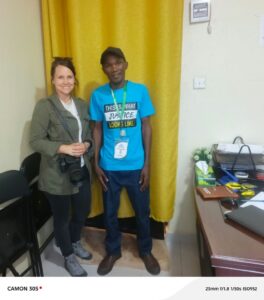
In a significant step toward public accountability, human rights defender David Khaemba has formally petitioned the Ministry of Defence to disclose comprehensive recruitment data regarding the Kenya Defence Forces (KDF) cohort that graduated in Eldoret in August 2026.
The request follows widespread public discussion and social media allegations claiming tribalism, nepotism, and favouritism during the nationwide recruitment exercise.
Key Information Demanded from Defence Ministry
In a formal letter addressed to the Cabinet Secretary for Defence, Khaemba has requested official disclosure on several critical parameters of the recent recruitment drive:
- County and Regional Distribution: The total number of recruits enlisted in the cohort, broken down by county across all 47 counties, alongside corresponding percentages.
- Ethnic Representation: Comprehensive statistics showing the percentage of recruits from each ethnic community to verify regional and national balance.
- Selection Transparency: Data detailing the total number of shortlisted applicants versus final recruits, as well as the number of candidates eliminated at each selection stage and the formal grounds for their disqualification.
- Policy on Sibling Enlistment: Clear documentation outlining the official regulations governing the recruitment of multiple members of the same family, following viral public discussions surrounding a photograph of alleged siblings graduating in the same cohort.
- Anti-Corruption Safeguards: Verification of the institutional mechanisms established to safeguard the recruitment process against nepotism, tribalism, and political interference.
“The issue is not the presence of youth from any specific community in the KDF. The issue is whether all Kenyan youth are given a genuinely equal opportunity to compete. The Constitution does not establish first-class and second-class Kenyan communities.”
Public Claims and the Need for Verification
The petition addresses widespread social media commentary, including unverified claims alleging that up to 3,000 out of 5,000 recruits originated from a single ethnic community. Khaemba emphasized that his petition does not state these unverified figures as established facts, but highlights them as matters of paramount public concern that necessitate official clarification.
“It is precisely because these are allegations of enormous public significance that the ministry must publish official recruitment data to either confirm or disprove them,” the petition notes.
The demand letter, dated 18 August 2026, has also been copied to key constitutional and state oversight organs, including:
- The Chief of the Defence Forces (CDF)
- The Ethics and Anti-Corruption Commission (EACC)
- The Commission on Administrative Justice (CAJ / Ombudsman)
- The National Cohesion and Integration Commission (NCIC)
- The Kenya National Commission on Human Rights (KNCHR)
Legal Statutory Timelines and Response
The activist has issued a 14-day notice for the Ministry of Defence to provide a substantive response, reserving the right to seek constitutional and judicial remedies under the law should the ministry fail to provide satisfactory disclosures.
Acknowledging receipt of the petition, the Commission on Administrative Justice (CAJ) confirmed through Legal Officer Maryann Wanjiru that the institution operates under a statutory 21-day processing timeline pursuant to the Access to Information Act, 2016. Should no response be forthcoming within the statutory period, the petitioner may lodge a formal application for review under Section 14 of the Act.
APO’s Position: National Cohesion Through Equal Opportunity
Agents of Peace Organization stresses that equity in public recruitment—particularly within national security and defense forces—is critical for peace, national unity, and public trust:
- Constitutional Compliance: Articles 10, 27, and 35 of the Constitution of Kenya explicitly demand national values of inclusiveness, equality, non-discrimination, and access to public information.
- Preventing Social Conflict: Perceptions of exclusion or favouritism in public service recruitment erode social cohesion, foster resentment, and undermine long-term stability.
- Building Trust: Full transparency and independent reviews involving oversight bodies like NCIC, EACC, and KNCHR safeguard institutional integrity and assure every Kenyan citizen of fair treatment.
APO calls on the Ministry of Defence and all state organs to champion openness, uphold constitutional equity, and ensure that recruitment into public service reflects the diversity and unity of the Kenyan nation.
This article is adapted from reporting originally published by The Star Kenya (Hilton Otenyo, 28 August 2026). Photo credit: Hilton Otenyo / The Star.